I Love Bernie Sanders, But Let's Stop Treating Him Like He's Perfect
When I was a sophomore in college, I had to write a paper for a writing course. I can’t remember what topic the paper was on, but I do remember searching on Wikipedia for the “U.S. Democratic Party” to see what their values were. I didn’t really know much about politics at the time, but I did know my values, and I knew I aligned more with Democrats than Republicans. In my paper, I wrote down what I saw on that Wikipedia page: I support universal healthcare, stricter gun laws, LGBTQ rights, abortion rights, and living wages. When I got the graded paper back, my professor had circled those values and wrote in big, bold letters “SOCIALIST!” To be fair, my professor was young, had a sarcastic sense of humor, and was most likely being tongue-in-cheek. But my reaction to his comment was shock; I didn’t want to be called a socialist. After all, isn’t socialism bad? My family, including my parents, were Vietnamese refugees, and they’ve always spoken ill of communism in Vietnam. And aren’t communism and socialism the same thing?
In 2016, I was more knowledgeable and invested in American politics. I supported Hillary Clinton for President. Even in 2008, before I was old enough to vote, I preferred Clinton over Obama because she had more experience. But then came a little-known Senator named Bernie Sanders, who took the Democratic Party by storm and surprised everyone, including himself (probably), with how successful his campaign was. Bernie’s populist appeal won me over. His fight for universal healthcare and free college tuition, and his fight against income inequality and the ills of capitalism, convinced me that there was a lot wrong with our country, and a major revolution would be the solution.
So I voted for Bernie. I was at a karaoke party during the Iowa Caucus, sitting in a corner with my phone, awaiting the results, only to be left disappointed when he lost. When the time came, I proudly voted for him in Louisiana’s primary. I also began to attack Hillary Clinton. I shared countless articles and Facebook posts about how she wasn’t a progressive, that she wasn’t a trustworthy politician, that she was a liar, and was part of the same establishment politics that caused so many things that were wrong with the country. It got so intense I almost started to believe Clinton was just a straight up bad person. Since then, I’ve come to recognize the mistakes I’ve made when supporting one politician over another in a competitive primary. Today, I find myself on the other side, arguing against Bernie’s passionate base - not because they’re supporting Bernie (I, too, consider myself a Bernie fan) - but because of how they’re supporting him.
BERNIE ISN’T PERFECT
Bernie Sanders deserves a lot of credit for moving the Overton Window for progressive causes into mainstream acceptance. Ideas like universal healthcare, free college tuition, and eliminating student debt are now popular. At the 2016 Democratic National Convention, he helped develop the most progressive platform in the history of the Democratic Party. Socialism has now become more popular, especially among youths. But Bernie Sanders is not flawless. Like every one of us, he’s human. But you wouldn’t know it by talking to many of his supporters.
To be fair, Bernie does have a lot of influential groups against him, with many of the attacks unfair and purely antagonistic. Republicans don’t like him because he’s a socialist (technically Democratic Socialist, but it’s all the same to Republicans). Democrats don’t like him because he’s not a Democrat. The media tends to be against him too. So it’s understandable why Bernie’s supporters would so quickly come to his defense. The problem is, you can’t just defend Bernie when he’s unfairly attacked, yet give him a pass when there’s legitimate critiques against him. Otherwise, it becomes Trumpism.
When it comes to race, supporters like to reference his history of supporting the Civil Rights Movement, and being part of Dr. Martin Luther King Jr.’s historic March on Washington. It’s wonderful Bernie was on the right side of history back in the 60s. But what has his experience with race been like since then?
Bernie has admitted that it wasn’t until he was already in his 70s that he discovered how racist the criminal justice system was. “I could not fully appreciate until I ran for President, to be honest with you, how corrupt and racist our criminal justice system is.”
During the 2016 cycle, he trailed Clinton in Black support. He had constant conflict with the Black Lives Matter protesters, at one point saying “Black lives matter, white lives matter, Hispanic lives matter.” Irritated by some Black Lives Matter protesters, he proclaimed "I've spent 50 years of my life fighting for civil rights. If you don't want me to be here, that's okay."
Any time he was asked about race and criminal justice, his solution was always about economics. After several confrontations with Black Lives Matter activists, Bernie’s campaign finally released a Racial Justice plan.
After 2016, it was revealed that many women experienced sexual harassment from their male colleagues during Bernie’s campaign. When pressed about this issue and whether or not he knew about it, Bernie apologized. But he also said “I was a little bit busy running around the country, trying to make the case.” After this, Bernie ran a 2018 senate re-election campaign with better safeguards against sexual harassment.
I point out examples like these two not to attack Bernie Sanders, but to remind his passionate supporters, many of whom are my friends, that he’s still a politician, and like any politician, he needs to be held accountable. Bernie’s 2020 campaign is a significant improvement upon his 2016 one, with a stronger and more diverse coalition backing him. What he learned from 2016 has helped him become the clear frontrunner in a crowded field. But can you imagine the criticism many Bernie supporters would spew against the competing candidates had any of them responded the same way he had to criminal justice or sexual harassment?
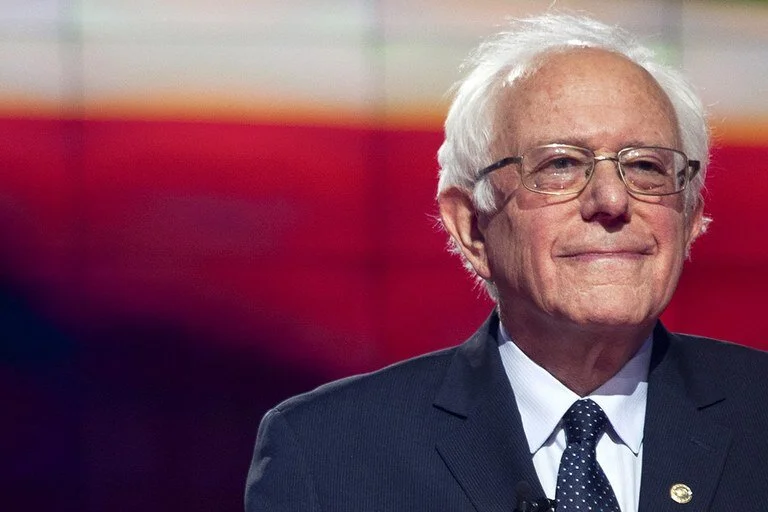
When Amy Klobuchar said she believed the Democratic Party should be a big tent that includes pro-life Dems, Bernie supporters criticized her. Yet, just three years ago, Bernie was saying the same thing. "The truth is that in some conservative states there will be candidates that are popular candidates who may not agree with me on every issue,” he said. “I understand it. That's what politics is about.” And you know what? Bernie (and Amy) is right. Due to the nature of the U.S.’s two-party system, the Democratic Party will need to include pro-life Dems under their umbrella to win in more conservative areas. Bernie, who is pro-choice, isn’t a political hack, and he didn’t go against his values, for saying what he said. He was being realistic.
Bernie has a mixed record when it comes to guns. He’s certainly not a gun nut, and supports sensible gun laws. But his record does show he voted against the Brady Bill in 1993, which required a five-day waiting period and background check. In 2003 and 2005 he supported legislation that protected gunmakers and sellers from lawsuits.
On immigration, Bernie used to believe immigrants were stealing jobs from American workers. Just this week, Bernie’s campaign backtracked on his stance on deportations. Bernie previously said he would put a moratorium on deporting undocumented immigrants. However, his campaign manager, Faiz Shakir, clarified that violent criminals would be still deported.
Bernie often points to Hillary Clinton and Joe Biden’s votes in support of the Iraq War, and his vote against it, as an example of their poor judgement and his sound one. But Bernie also voted for the disastrous 1994 tough-on-crime bill, which helped increase mass incarceration. Bernie defends this vote by saying he only supported it because it included other good provisions, such as the Violence Against Women Act. Bernie’s vote in support of the tough-on-crime bill isn’t a backtrack on his values, it’s an example of predicaments that face all politicians: sometimes you’ll make a bad call, and sometimes you have to compromise.
So you can see why I get so angry when Bernie supporters make unfair attacks against Elizabeth Warren, often questioning her dedication to progressive causes. They’ve accused Warren of not being a progressive for supposedly backtracking on her support for Medicare For All, despite the fact that she’s a co-sponsor of Bernie’s Medicare For All bill and still supports the plan on her campaign website. Bernie supporters attacked Warren for including a two-step process that starts off with a public option and a four-year transition in place for her Medicare For All Plan, citing all of this as proof that Warren doesn’t actually plan on passing Medicare For All. Yet Bernie’s plan also includes a four-year transition, and one of his most famous surrogates, Alexandria Ocasio-Cortez (D-NY), even said “We have to make sure we’re not creating some sort of expectation that electing a president means that the entire agenda is just sort of self-actualizing… A president can’t wave a magic wand and pass any legislation they want… The worst-case scenario? We compromise deeply and we end up getting a public option. Is that a nightmare? I don’t think so.”
Never mind that other Bernie surrogates, including Rep. Pramila Jayapal (D-WA) and Rep. Ilhan Omar (D-MN) have come to Warren’s defense. Jayapal has said “I understand that people have favorites… We are better off having two strong presidential candidates endorsing Medicare for All than having one.” Omar called Warren’s Medicare For All plan “excellent.” She’s said “there are many approaches to how we transition into this.”
BERNIE ISN’T A DEMOCRAT
At the Nevada Democratic Primary debate last week, Bernie supporters were outraged that all of his opponents were in favor of letting the primary process play out instead of automatically guaranteeing that the candidate with the most delegates becoming the nominee. Bernie is the frontrunner, having the most popular votes and delegates, so his team and supporters know he has the best chance of entering the Democratic National Convention with the plurality of delegates, though not the majority (which is needed to win the nomination).
Bernie supporters are upset at the idea of superdelegates overturning the will of voters. The problem is, Bernie was saying the same exact thing back in 2016. Despite his opposition to superdelegates, when it was clear his campaign wasn’t going to get enough delegates to win, Bernie tried to convince superdelegates to switch their support from Clinton to him, which would essentially overturn the will of voters since Clinton won the popular vote. “The responsibility that superdelegates have is to decide what is best for this country and what is best for the Democratic Party,” Sanders said in 2016. “And if those superdelegates conclude that Bernie Sanders is the best candidate, the strongest candidate to defeat Trump and anybody else, yes, I would very much welcome their support.”
Bernie’s crusade against superdelegates in 2016 helped the Democratic Party reform its nomination process in 2018 - reform that Bernie approved. The new process now bars superdelegates from having any influence whatsoever - unless there is a contested convention. If no candidate earns the majority of delegates (over 50%), it means there’s a second round of voting at the convention where superdelegates get to have their input.
Anyone who doesn't believe her on this fact should watch this. pic.twitter.com/pSH2mziOQt
— Davy Wybiral (@davywtf) February 27, 2020
There’s a lot of hate for superdelegates, with many calling it undemocratic, but there are some justifications for them. While they were originally created so that Democratic party leaders could control who becomes their nominee in case any fringe candidates rise, groups like the Congressional Black Caucus have argued against reducing superdelegates’ influence in the nomination process. They argue that superdelegates empower groups that have been historically disenfranchised. When you think about the Democratic primary process, in which majority-white states traditionally winnow the field down dramatically, it usually cranks out more white-accepted candidates. Look at the 2020 race, which started out with the most diverse group of candidates ever to run for president, now reduced to a small pool of exclusively white candidates (and Tulsi Gabbard) before anyone even had a chance to vote. “Are you telling me,” asked Karen Carter Peterson, the DNC Vice Chair, “that I’m going to a convention after my 30 years of blood, sweat, and tears for this party, that you’re going to take away my right?” Superdelegates give groups like the Congressional Black Caucus the opportunity to speak for their communities and have some say in who represents them.
"The black caucus is immovable on this subject because our number one concern is going to be an always be the highest level of minority participation as possible at the convention," Rep. Emanuel Cleaver said in the midst of the superdelegate debate. "You're going to see the same thing with the Hispanic Congressional Caucus. Mr. Sanders, if he had met with either or what's called the tri-caucus, he would have found out there is no flexibility."
Indeed, at the start of his 2020 campaign, Bernie developed a strategy to recruit superdelegates, should the time arise. “Sanders… tasked Matt Berg, a former 2016 aide, with overseeing delegate strategy and ballot access, including superdelegate outreach… Sanders aides say they hope to be in contact with superdelegates earlier in the process than last time, when a last-ditch effort to court their support prompted one supporter to encourage Sanders voters to ‘harass’ superdelegates by posting their contact information in an online ‘hit list.’”
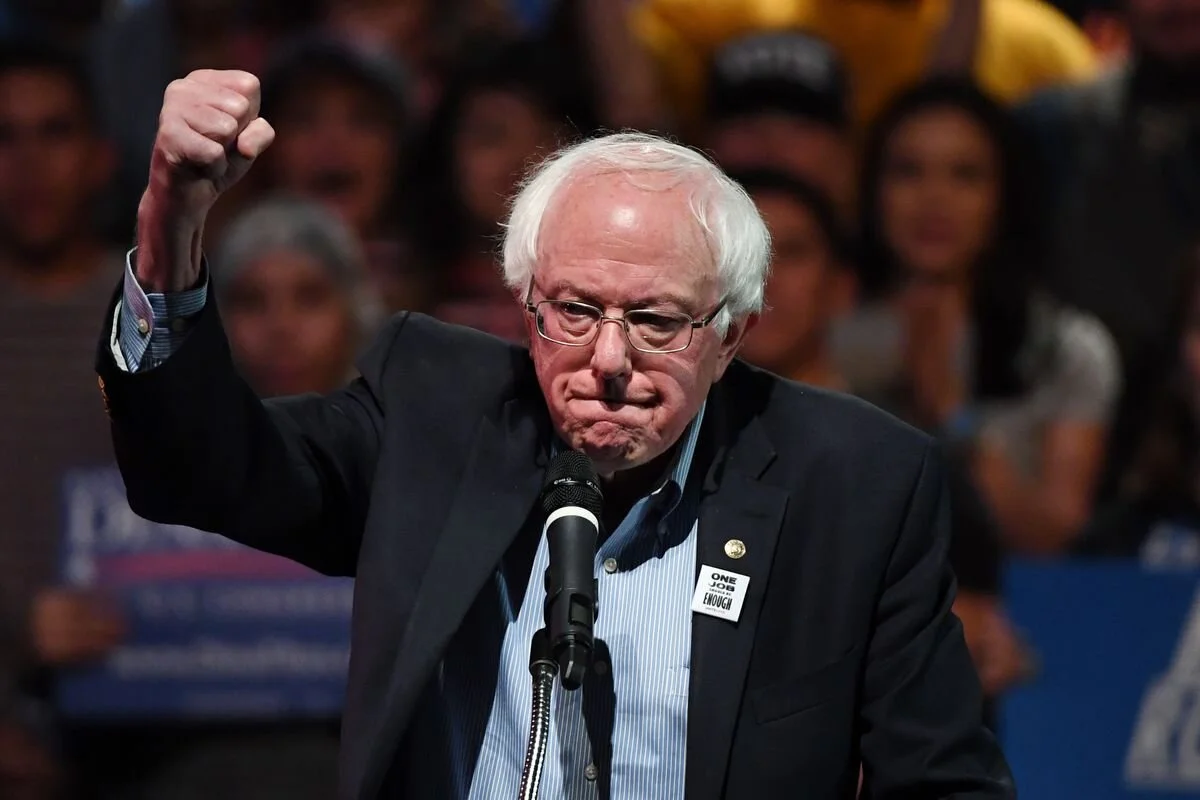
A problem I have with Bernie’s constant fights with the Democratic Party is the fact that he isn’t a Democrat. I don’t have a problem with Bernie being an Independent. I’ve defended his decision to remain independent despite caucusing with Democrats because it meant he wasn’t beholden to anyone else. But I do have a problem with someone who clearly isn’t a Democrat being upset at how Democrats nominate a candidate of their own party, and for being biased against someone who isn’t a Democrat! You don’t have to like the Democratic Party to understand why it’s ludicrous to hate the party for being against someone who isn’t one of them. To be clear, I am not defending the Democratic Party as an institution. Our political system is messed up, and part of it is because we’re in a two-party system. After the 2016 election, I became so disillusioned by the state of American politics that I unregistered myself as a Democrat. I applaud Bernie for helping to reshape the Democratic Party into a more progressive one. But I also don’t subscribe to the idea that Bernie is being treated unfairly by a party that he isn’t a part of.
BERNIE SUPPORTERS’ ATTACKS AGAINST ELIZABETH WARREN
nothing says "I am the unity candidate" more than finishing 4th in NH then trying to kneecap the frontrunner
— Rob (@robrousseau) February 12, 2020
It’s ironic that in 2020, Bernie supporters are treating it as if he’s entitled to the presidency, similar criticisms that have been thrown at Clinton’s 2016 campaign and Biden’s 2020 one. When I went to Warren’s Virginia town hall earlier this month, right when Warren got on stage, a Bernie Bro held up a big sign that said “Endorse Bernie Already.” His supporters believe Elizabeth Warren, his closest ideological colleague in the Senate, should drop out because it would hinder his chances of becoming the nominee, as if he’s entitled to this simply for having more name-recognition as a leading progressive (thanks to his run on the national stage in 2016).
Instead of viewing Warren as an ally to the Progressive Movement, many Bernie supporters have decided to tear her down, including those who like Warren but suddenly changed their tune now that Bernie is her opponent. This dramatic turn against her is exemplified in Susan Sarandon’s support for Elizabeth Warren to run for president in 2016, only to bash Warren in her support for Bernie, saying Bernie “isn’t someone who used to be a Republican.” (Warren was a registered Republican from 1991 to 1996).
I want a woman to be Pres. The RIGHT woman. Looking at you @SenWarren. 😁 https://t.co/GQ9ku7CLjs
— Susan Sarandon (@SusanSarandon) April 29, 2016
The Speech That Could Make Elizabeth Warren the Next President of the United States @huffpostblog http://t.co/Im8R23rHTC via @HuffPostPol
— Susan Sarandon (@SusanSarandon) December 16, 2014
When talking to my Bernie-supporting friends, I’ve heard them call Warren “an establishment Democrat,” despite the fact that Warren didn’t become a Senator until 2013, when she was in her 60s, and her history of bucking President Obama’s administration. My friends have also called her “elitist,” despite spending the majority of her adult life as a teacher and not as a public figure.
When I shared that a major culinary union in Nevada criticized Bernie and Warren’s Medicare For All plans, my Bernie-supporting friend accused the union of not knowing what they’re talking about. After the same culinary union revealed that they’ve been targeted and attacked by Bernie supporters, Warren tweeted out in support of them. Another Bernie-supporting friend sent me this tweet, criticizing Warren for being disingenuous in her support of unions because she crossed the picket line last year. A quick Google search brought me to this article, in which Warren’s team “told CBS News that the incident in question involved two advance staff members and claimed that there was no picket line… The campaign apologized to the Culinary Union ‘weeks ago when we realized it.’”
In case anyone thinks this is in good faith, Warren crossed the Culinary’s picket line at the Palms multiple times last year https://t.co/RduPXBdQJt
— 2004 Kentucky Derby Winner Smarty Jones (@socretariat) February 13, 2020
When I shared this article that defended Warren after she claimed Bernie told her a woman couldn’t beat Trump in 2020, my Bernie-supporting friends came to his defense, supporting Bernie’s denial that he said that. They chose to immediately believe Bernie over Warren. They called her “shill” (I’m not sure if they meant “shrill”). They referenced Bernie’s history of supporting women, as well as his push for Warren to run for president in 2016.
All of these examples bring me to the same question: why is it that the first reaction to any criticisms against Bernie is to immediately attack and discredit the people bringing attention to them? Unions are an important part of his populist base, yet when one publicly shared their reservations about his healthcare plan, his supporters threatened and doxxed union members and their families. When Warren and Bernie fought publicly about who said what in their private conversation in December of 2018, their first instinct is to believe him over the words of a woman.
This type of behavior is indicative of a more infamous issue among Bernie’s supporters, and it’s the Bernie Bros. I don’t use this term to erase the diverse coalition backing Bernie’s campaign this time around. I’m specifically referring to a small, but vocal base that attack, harass, and doxx anyone who criticizes Bernie. Many of his supporters try to downplay this fact, and I understand that it’s difficult to control how every single person behaves when you have millions of supporters, but it’s still a real issue that many people endure because Bernie isn’t their number one choice. Admittedly, I had a mutual follower on Twitter who was passionately Pro-Bernie, and I was a witness to his consistent attacks against others who spoke negatively of Bernie. It got to the point where I finally had to block him. This wrath of Bernie Bros is an issue that everyday people and even well-known people experience. Even one of his staffers was recently exposed for having a secret Twitter account that was used to attack others. How did Bernie supporters react? They did so by trying to discredit the journalist who wrote the article and later doxxing him.
I’m undecided. But I know this isn’t what I want. https://t.co/OBKZi0hee1
— Ava DuVernay (@ava) February 22, 2020
Bernie supporters terrroizing my mentions while I’m off enjoying my Saturday. pic.twitter.com/04bvuZLxO7
— Ava DuVernay (@ava) February 22, 2020
A common criticism against Elizabeth Warren’s faithfulness to the progressive cause is her lack of an endorsement for Bernie Sanders in the 2016 Democratic Primary. Warren remained neutral in his race against Clinton, despite her politics aligning more with Bernie. At the time, even I wondered why she stayed neutral until the primary was over.
It turns out, pretty much everyone had assumed (correctly) that Hillary Clinton would become the nominee, and most people don’t know that Warren was working behind the scenes to influence the Clinton campaign (and Clinton’s expected administration). As reported in Politico, “She pressed Clinton to commit to not appointing Wall Street-friendly people to her administration, as Warren felt Bill Clinton and Barack Obama had done.” Warren spent two years worked to shape the Clinton administration, advocating for economic advisors who were critical of Obama’s handling of the financial crisis.
Like Bernie, Warren was a critic of Obama’s administration and wasn’t afraid to be combative against the leader of her own party. She was extremely vocal against Tim Geithner, Obama’s choice to run the Consumer Financial Protection Bureau - the agency she helped establish. “I believe the recovery should have been from the ground up, and people with Geithner’s and Summers’ background would never see the world that way—they just don't see it that way,” Warren says. “America works great for the wealthy and the well-connected—that was demonstrated big time during the financial crisis. ... Donald Trump stepped into that and said, ‘If your life isn't working great, blame them.’ His version of ‘them’ is anyone who doesn’t look like you.”
“Amid the financial crisis, Warren had become an unlikely star of the left with unambiguous moral outrage and an ability to explain complex financial topics in ways that made them fodder for dinner-table conversation. Improbably, she had turned a largely powerless congressional panel monitoring the bank bailout into a national bully pulpit of populist fury. Her target was not just the big banks but the new Democratic administration, which she suggested had been co-opted by them.”
Why didn’t she run in 2016, despite the support of a massive Draft Warren campaign, Hollywood stars like Mark Ruffalo, and even Bernie Sanders? At the time, Warren was only two years into her first term as a U.S. Senator. Can you imagine the attacks that would’ve been waged at her had she decided to run for president? Barack Obama was also a one-term senator before becoming President, but he also had the benefit of being a man.
Scarlett Johansson and Mark Ruffalo really are the most adorable duo.
— sigh (@sadgrlships) May 15, 2019
“PICK UP THE HAMMER LIZ, PLEASE PICK UP THE HAMMER!”
✨
✨
we love our Elizabeth Warren stans pic.twitter.com/5C9d0GOoNo
Elizabeth Warren likes to say “I’m a capitalist to my bones,” to help differentiate herself from Bernie Sanders. On one hand, it’s a clever way to appeal to moderate and conservatives who are freaked out by anything remotely associated with “socialism.” On the other hand, it’s also caused a lot of progressives, who are justified in their distaste for capitalism, to criticize her support of such a disastrous system. It’s safe to say many Bernie supporters are against capitalism and align themselves more with socialism. Heck, I’ve also become disenchanted with capitalism. However, I actually believe Bernie and Warren are advocating for the same thing, they’re just calling it by two different names.
Bernie Sanders isn’t trying to turn the U.S. into a true socialist economy. He’s a democratic socialist, and he wants us to look more like Denmark. Bernie’s Nordic model is heavy on social programs that uplift everyone, while still maintaining markets. Warren’s vision is to root out corruption and have a heavily-regulated capitalist economy that works for everyone. She also supports the same socialist programs as Bernie. I don’t know about you, but they sound a lot alike.
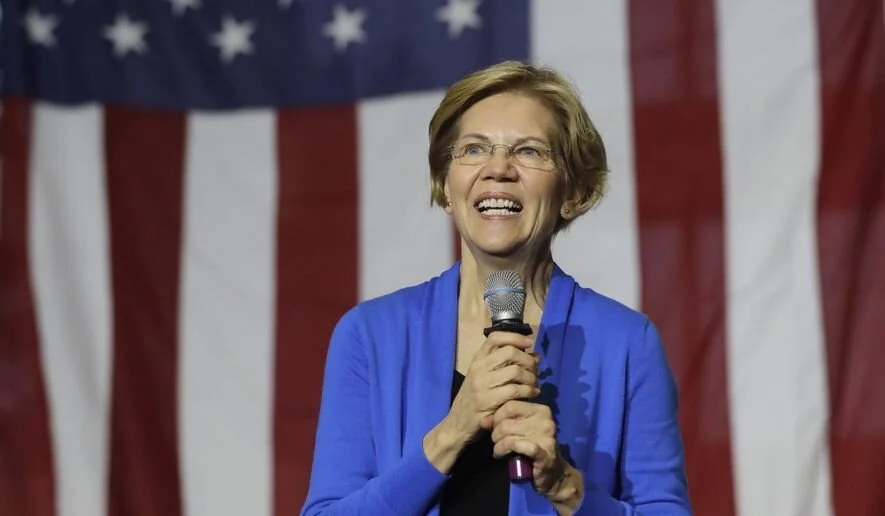
Why I’m Voting For Elizabeth Warren
Before I even knew who Bernie Sanders was, I was a fan of another progressive populist - Elizabeth Warren. I saw the viral video from the time Warren was running for her first U.S. Senate seat, in which she advocated for the “social contract.” “Now look, you built a factory and it turned into something terrific, or a great idea? God bless,” she says. “Keep a big hunk of it. But part of the underlying social contract is you take a hunk of that and pay forward for the next kid who comes along.” This is an early example of Warren’s undying ability to summarize complex issues into easily-digestible concepts to the general public.
In an interview with Jon Stewart, he tells her “That is the first time in probably six months to a year that I... felt better. I don't know what it is that you just did right there, but for a second, that was like financial chicken soup for me. That was... thank you."
Bernie Sanders himself has praised Warren’s ability. "We brought Senator, well, Elizabeth Warren to the town meetings, and she blew me away with her ability to deal with complicated economic issues in a language that people could understand," he’s said. "I'm a fan of Elizabeth Warren."
Warren is so skilled, in fact, that even a famous orator like Barack Obama struggled to get the same message across.
I support Elizabeth Warren because not only does she share many of the same values and policies as Bernie Sanders, but I feel she is the best person to get the job done. Her 2020 campaign is famous for her many, many detailed plans. While Sanders may dismiss people for asking how he’ll pay for his programs, Warren doesn’t shy away from explaining how - she’s done the homework. (This week, Bernie’s campaign did finally release a plan on how to pay for his proposals - over a year since the start of his campaign).
When asked how he will get anything passed in a Mitch McConnell Senate, Bernie says he’ll pressure the Majority Leader into it based on the will of the American people. Warren, on the other hand, understands that to enact a progressive agenda, the filibuster must go. It’s ironic that the candidate advocating for revolution isn’t willing to abolish an arbitrary rule that isn’t even in the constitution. “How are we going to deliver a revolution if you won’t even support a rule change?” fellow presidential candidate Pete Buttigieg rightly called out in the last debate.
Warren is the candidate for big structural change who believes in reforming the Supreme Court, including expanding the number of justices - Bernie is not. It’s a risky idea for sure, but when you consider the current makeup, with one seat stolen from Obama, with Brett Kavanaugh being hugely unqualified, and with a Supreme Court majority that has grown hostile to voting rights, abortion rights, and immigration rights, the tactic may be necessary.
I support Elizabeth Warren because she understands it’s not enough to advocate for socialist programs, but that you have to tackle the corrupt systems that are preventing such programs from being introduced. She’s running on a major anti-corruption platform and understands that corruption is the root of so many of our problems. As naive as it sounds, she makes me believe in a capitalist society that can work for everyone, so long as it’s heavily regulated and works in tandem with strong social welfare programs.
I support Elizabeth Warren because she owns up to her mistakes. When several women of color left her Nevada campaign team, citing “a toxic work environment in which minorities felt tokenized and senior leadership was at loggerheads,” Warren didn’t get defensive and dismiss the criticisms. Her response was "I believe these women without any equivocation, and I apologize personally that they had a bad experience on the campaign… I take personal responsibility for this, and I'm working with my team to address these concerns.”
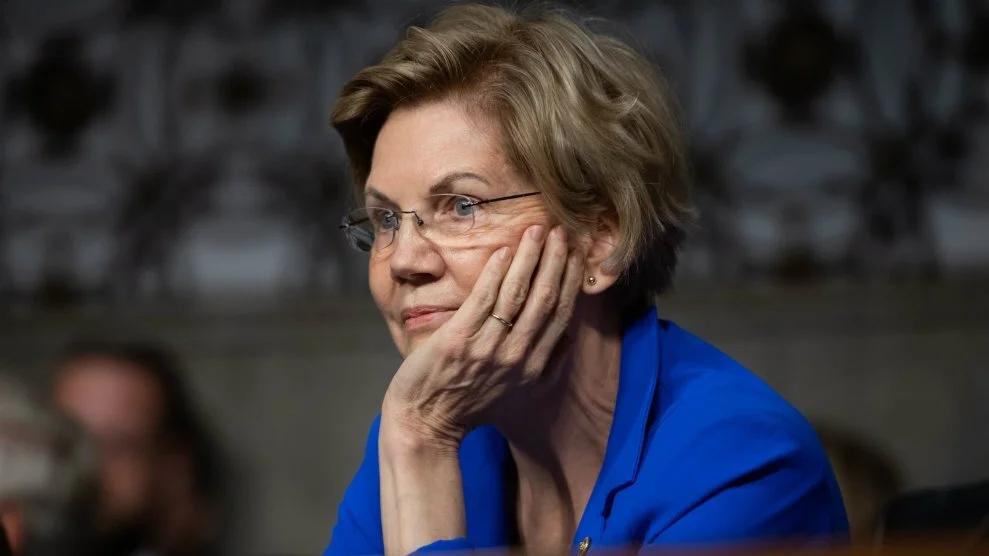
She’s a leader who is able to change her strongly-held beliefs when presented with facts and data. When she researched bankruptcy, expecting to find evidence of cheaters and deadbeat Americans abusing the system, she was surprised to find that “nearly 90 percent were declaring bankruptcy for one of three reasons: a job loss, a medical problem, or a family breakup.”
“Hers is the story of a convert, not a zealot. The decision to become a Democrat was anything but a default choice; she came to it only after years of study that challenged her more conservative assumptions about how the economy and the government worked… She went through what I think is the most powerful transformation, which is actually doing research and discovering that what you believed was wrong.”
As Warren told an interviewer in 2007, “I did the research, and the data just took me to a totally different place.”
I support Elizabeth Warren because she’s the only candidate left who weaves race back into almost every issue she discusses. “To ignore race in today’s political and economic system is to ignore reality,” Warren said. “I want America to talk more about this.” Unlike Bernie, Warren supports reparations for descendants of enslaved Africans. “Black families have had a much steeper hill to climb - and we need systemic, structural changes to address that.” And out of all the major candidates left, she’s the only one without a problematic record on race.
I support Elizabeth Warren because she’s gotten things done. Before she was even in the Senate, she created the Consumer Financial Protection Bureau, a federal agency that helped return over $12 billion to American consumers. She is able to work on bipartisan bills with her Republican colleagues. She’s passed more bills in her seven years as a Senator than Bernie has since joining congress in 1991.
I support Elizabeth Warren because she has good character. When I waited in line for her town hall, a staffer told us any signs attacking another candidate was not allowed. That’s an example of leading by example. Despite her contentious debates with former candidate John Delaney, he’s since come out and said the best call he received when he dropped out was from Warren. "Everyone was very nice. It was just that the call with her was quite lengthy and quite in-depth," he said. "That demonstrated to me that she has a trait that you don't always find in politicians, which is that she's not entirely self-absorbed. She actually listens."
When I left the race the best call I received was from @ewarren. We spoke at length about what we were all fighting for and why. Even if I don't agree with her on everything, she is a fighter, she's fights for the right reason, and she reaches out & cares. https://t.co/ihvIcuk3Ya
— John Delaney (@JohnDelaney) February 12, 2020
Elizabeth Warren is not flawless. Like every one of us, she’s human. No politician can be right on every issue. And she has made mistakes before and will make mistakes in the future. I understand if the controversy surrounding her claims of Native American ancestry is a dealbreaker for others. I understand if people are upset at her decision to no longer disavow super PACs that support her.
I understand that there may be a single issue someone may have with Warren that ultimately leads them to support another candidate, whether it be Bernie or someone else. Many people decide who they support base on their own preferences, whether it’s who they think has the best chance of defeating Trump, or if it’s someone whose policies align most with theirs, or if it’s someone you just trust more. Many people are voting for Bernie because he’s been consistent on many of the issues he’s been fighting for for decades. That’s something I very much appreciate and respect. One of my friends is voting for Bernie over Warren because she wants someone who is a “symbol” of the revolution he’s advocating for. That’s fair and I respect that. I’m voting for Warren over Bernie because I believe she will govern better, can build coalitions among other legislators, and can get a progressive agenda done. I believe Elizabeth Warren would be a better president. But no matter who we support, we can’t treat our preferred candidate as an untouchable savior-like-figure who is immune to criticism.
I know this entire post may sound like I’m attacking Bernie, but I assure you that is not my intention. In a field with so many strong candidates, we have to nitpick in order to decide who we ultimate choose as our candidate. I like Bernie Sanders, enough to have voted for him in 2016, and enough to support him wholeheartedly in 2020 if Warren is no longer running. I just don’t like what I’ve been seeing throughout the 2020 race, with his supporters giving him a pass, and for waging what seems to be a scorched-earth tactic against everyone else.
There’s a podcast I listen to called ‘Gaslit Nation’, co-hosted by Sarah Kendzior, a journalist and author who is an expert on totalitarian states, and who predicted the rise and success of Trump. I remember one of the podcast episodes from 2018 in which Kendzior warns us of treating our politicians as heroes. We must remind ourselves that politicians work for us. Not only should this advice be taken by Bernie supporters, I sometimes need to remind myself. I might sound hypocritical to some of my friends because many of them know I share a lot of pro-Warren posts on social media. The reason why I do this is because 1) Warren is my preferred candidate, and 2) I see a lot of unfair attacks against her from my friends who are supporting Bernie. But the truth is, I’m do still like and share pro-Bernie posts - he’s the one I’d want to win if Warren can’t, after all. And I do share posts that criticize Warren.
If Elizabeth Warren becomes our next president, she will make mistakes. There will be times when she will disappoint me. And when that time comes, I’m confident we will hold her accountable, that she will hold herself accountable, that she will listen, and she will do better. In the meantime, I’m going to dream big, and she will continue to fight hard.
ADDITIONAL READING:
The Case for Elizabeth Warren (Vox) / Video
The Case for Bernie Sanders (Vox) / Video
Why Are You Pissing In Our Face?’: Inside Warren’s War With the Obama Team (Politico)
Why I’m Endorsing Elizabeth Warren (The Nation)
Why I Support Elizabeth Warren For President (The Nation)
Bernie Sanders' Answer To Black Lives Matter Question Has Come A Long Way (Bustle)
Liz Was A Diehard Conservative (Politico)
This Was Elizabeth Warren’s Plan All Along (Huffington Post)
Elizabeth Warren Tells The Root How Capitalism Can Exist Without Racism (The Root)
Economist: Warren is right. Her Medicare for All plan won't raise taxes on the middle class (CNN)
Watch 'Black Lives Matter' co-founder endorse Sanders and Warren (MSNBC)
In 2020, Double Standards Are Still Dogging Elizabeth Warren - And All The Women Candidates (The Nation)
The Story Elizabeth Warren Isn’t Telling (The Atlantic)
The Differences Between Warren And Sanders Matter (The Atlantic)
Elizabeth Warren Exists (The Root)
Unity Requires Recognizing That Warren Is Telling The Truth (The Nation)
water and the wave: on change, hope, voting, and elizabeth warren (Medium)
An Open Statement from 140+ Asian American and Pacific Islander Leaders Endorsing Elizabeth Warren (Medium)
100+ More Asian American and Pacific Islander Leaders Endorse Our Next President, Elizabeth Warren (Medium)
STATEMENT OF ENDORSEMENT FOR ELIZABETH WARREN (Black Womxn For)
Socialists Will Never Understand Elizabeth Warren (Foreign Policy)
Inside the Secret List of Demands Warren Gave Hillary (Politico)
Sanders had big ideas but little impact on Capitol Hill (Politico)